The Sierra Leone Police
@ George Street, Freetown, Website: www.police.gov.sl
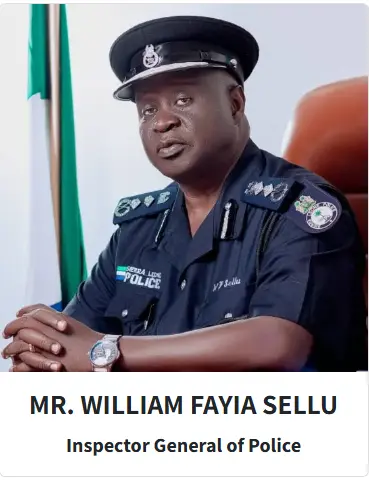
Inspector-General of Police
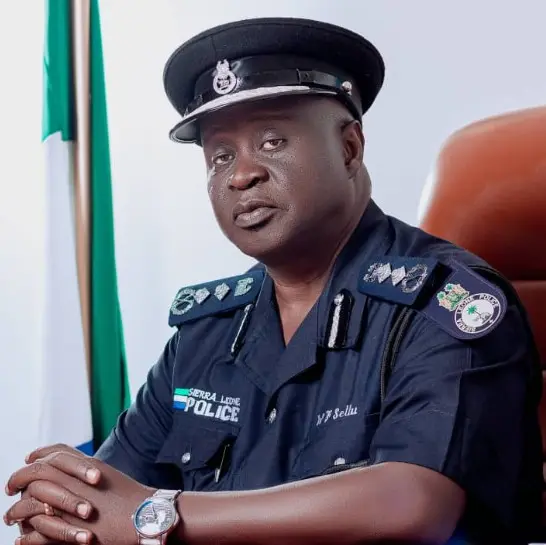
MR. WILLIAM FAYIA SELLU
Tel: +23278025006, Email: igpol@gov.sl
The Sierra Leone Police (SLP) was established under Section 3 of the Police Act of 1964. The SLP is headed by the Inspector General of Police (IGP) Mr. William Fayia Sellu and deputized by the Deputy Inspector General of Police (DIG) Mr. Sahr Yomba Senesie. The IGP was appointed by the President of Sierra Leone H.E. Brig (rtd) Julius Maada Bio on 27th July 2022, whilst the DIG was appointed on 22nd February 2025.
At the National Command Level, there are Strategic Commanders from the rank of Assistant Commissioner of Police (ACP) to Assistant Inspector General of Police (AIG) with responsibility for Operations, Human Resources; Training; Medical Services; Crime Services; Support Services; Professional Standards; Corporate Affairs; Peacekeeping; Gender Affairs; Community Affairs; Traffic Management; Intelligence; Presidential Guard; Infrastructure and the Operational Support Division (OSD), (the armed wing of the SLP).
Regional commanders known as Regpols who AIGs are carry regional responsibilities for the Freetown West Area, Freetown East Area, Northeast Area, Northwest Area, Southern Province and Eastern Province. All of these AIGs assist the IGP and the DIG in the running of the day-to-day affairs of the SLP. This is done through a joined-up leadership approach practicalised into an Executive Management Board (EMB), the highest policy making body in the organization which meets fortnightly under the chairmanship of the IGP.
MANDATE
(a) Protect the lives and property of all persons in Sierra Leone.
(b) Prevent and detect crimes and protect the rights and freedoms of every person in Sierra Leone as provided in the Constitution and any other law.
(c) Maintain public safety, law and order.
(d) Enforce all laws and regulations without prejudice to the enabling Acts of other security agencies.
(e) Collaborate with other agencies to take any necessary action and provide the required assistance or support to persons in distress including victims of road accidents, fire disasters, earthquakes, floods and any other disaster.
(f) Facilitate and collaborate with other persons or authorities to ensure the free passage and movement on highways, roads and streets open to the public.
(g) Adopt community partnership techniques and methods in the discharge of its responsibilities.
VISION
‘’A friendly, fair, and firm organization that the people can trust’’.
MISSION
The Police will collaborate with the public to enhance access to criminal justice and ensure security and stability conducive to social, economic, and political development in Sierra Leone’’.
The Sierra Leone Correctional Service
@ Pademba Road, Freetown, Website: slcs.gov.sl
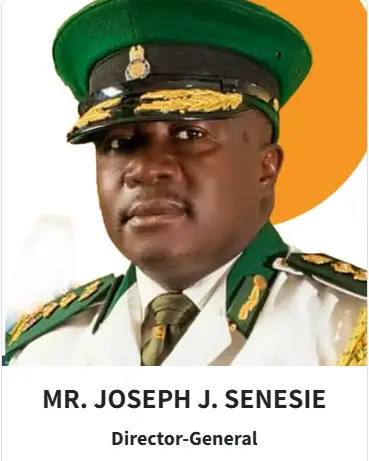
DIRECTOR-GENERAL
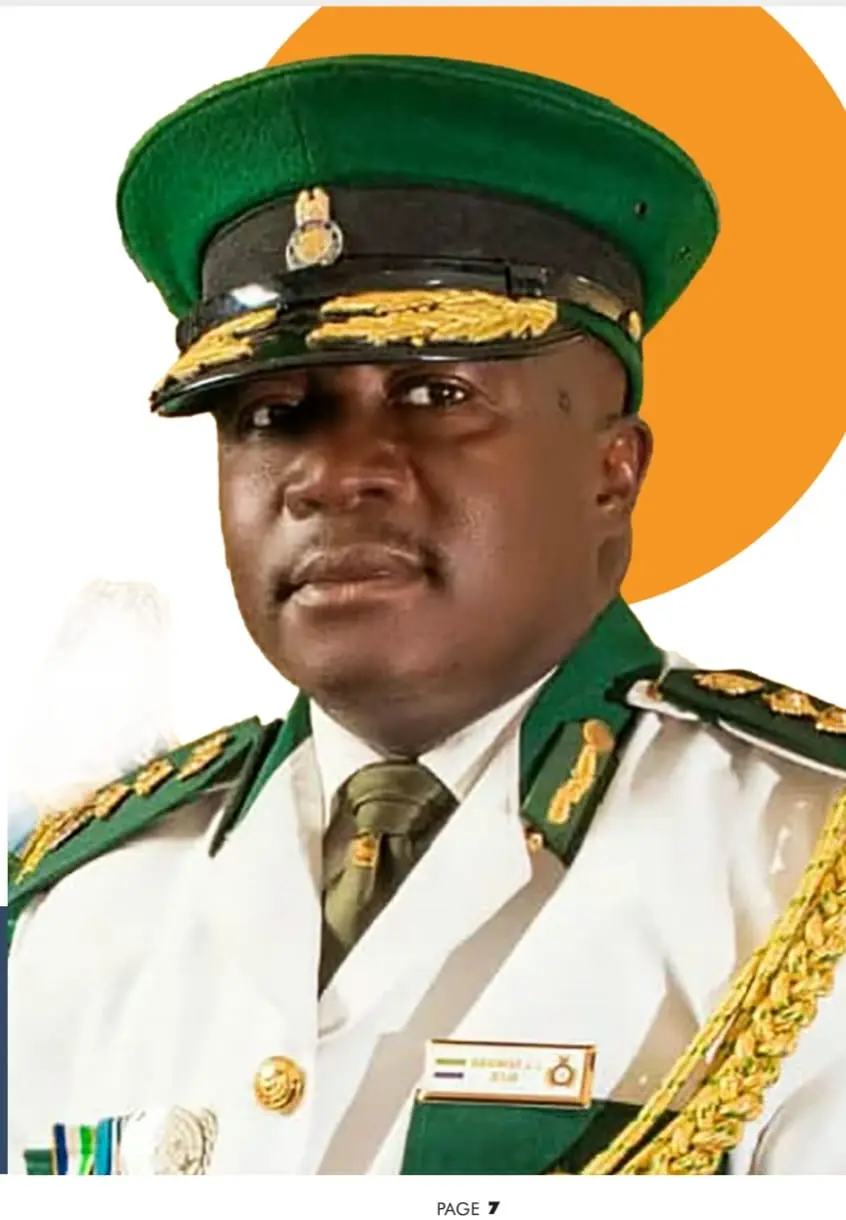
MR. JOSEPH J. SENESIE
Tel: +23278234800, Email: senessiejj@gmail.com/josephjsenessie@slcs.gov.sl/dg@slcs.gov.sl
The Director General
JOSEPH JOHN SENESSIE is the newly appointed Director General of the Sierra Leone Correctional Services. He is a Master's Degree holder in Public Administration and Bachelor of Science in Agricultural Education both attained at the Njala University College.
Mr. Senessie with five (5) other colleaques were sent to Kaduna state –Nigeria- forming the first set of Corrections Officers to benefit from Cadet course, in Kaduna Nigeria.
He is corrently persuing another Master’s Degree programme in Strategic Leadership at the Earnest Bai Koroma University of Science and Technology.
VISION STATEMENT
"To provide a secure, caring and reliable service to inmates and society"
MISSION STATEMENT
The Sierra Leone Correctional Service exists as part of an integrated justice system to protect society by keeping inmates in secure and humane conditions whilst encouraging and actively assisting in their rehabilitation and re-integration by a professional workforce.
CORE VALUES
- We respect and uphold the fundamental human rights of inmates
- We are dedicated to providing oppopportunities for offender success
- We honour and respect the rights of victims
- We ensure equal access to Justice and opopportunity for all
- We respect diversity and gender sensivity
- We show patience and tolerance towards the inmates
- Our staff succeeds through team spirit among our workforce
- We are transparent and accountable to the public
- We uphold equality, honesty, openness and integrity
MANDATE
The Core role of the Sierra Leone Correctional Service as an integral component of both the Justice and Security and architecture and underlined as follows:
(i) To keep inmates in a secure, safe and humane condition and to produce them on demand based upon a judicial or executive warrant.
(ii) To assist inmates in their rehabilitation and re-integration inorder that they may become useful and productive citizens upon their discharge.
The Sierra Leone Immigration Department
@ 14 Gloucester Street, Freetown, Website:www.slid.gov.sl
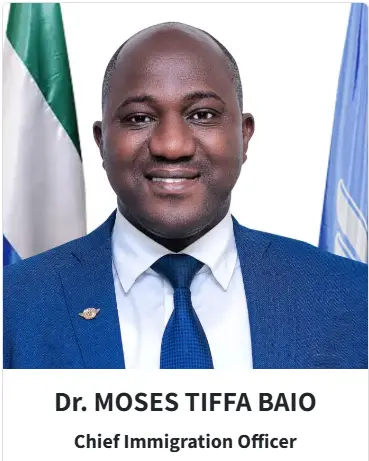
Chief Immigration Officer
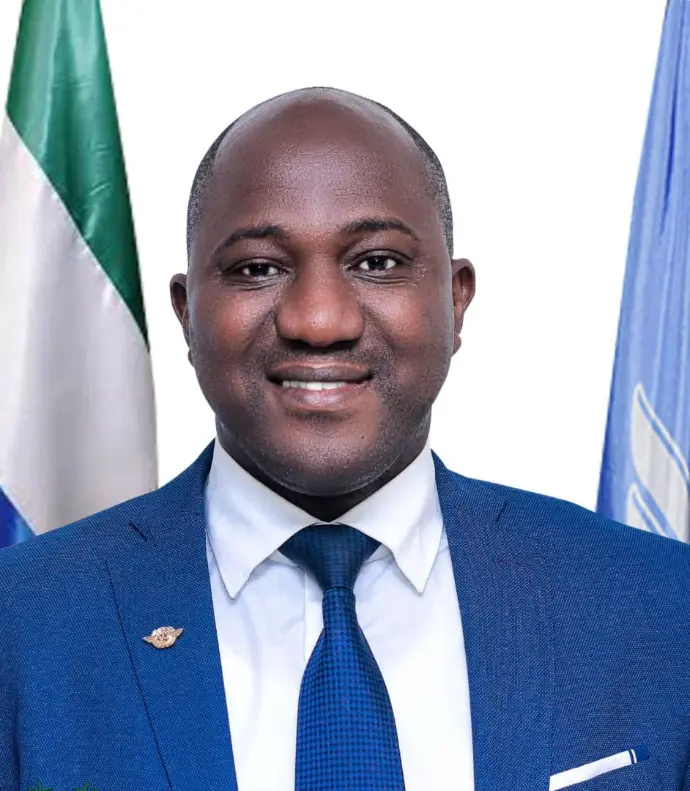
DR. MOSES TIFFA BAIO
Tel: +23276575361, Email: mtiffabaio@gmail.com
Dr. Moses Tiffa Baio has been appointed by His Excellency Dr. Julius Maada Bio as Chief Immigration Officer (CIO) of the Sierra Leone Immigration Department following a recent announcement on Friday 7th March 2025.
He was the Director-General of the Sierra Leone Civil Aviation Authority. During his tenure, he became the second Vice President for Aviation Safety for Africa and Indian Ocean Countries-AFI States. He also served as a member of the International Civil Aviation Organization (ICAO) Global Aviation Safety Plan Study Group. The Aviation gaffer served as chair and as a panelist on many international Aviation platforms.
As Head of the Aviation industry in Sierra Leone, he brought leadership innovation to establish an effective and efficient autonomous Civil Aviation Safety Oversight System, which drastically increased Sierra Leone’s safety rating from 18% to 74% in the ICAO Universal Safety Rating, a feat that has been lauded by aviation leaders and experts around the world.
Additionally, Dr Baio increased the State Security Rating to 71.9 %, above the regional benchmark. He also facilitated and oversaw the implementation of the ICAO SAFE Funds project, the CART recovery project and the Billing and Settlement Plan by the International Air Transport Association (IATA).
The National Fire Force
@ A.J. Momoh Street, Central Freetown. Website: XXXXXXXXX
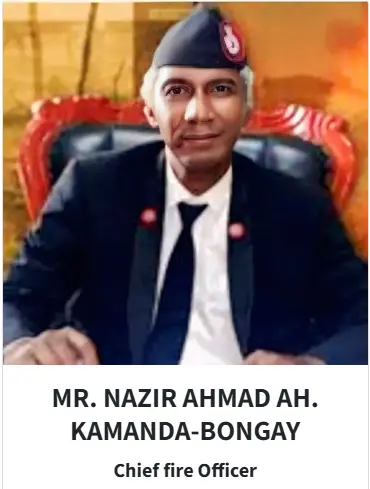
Chief Fire Officer
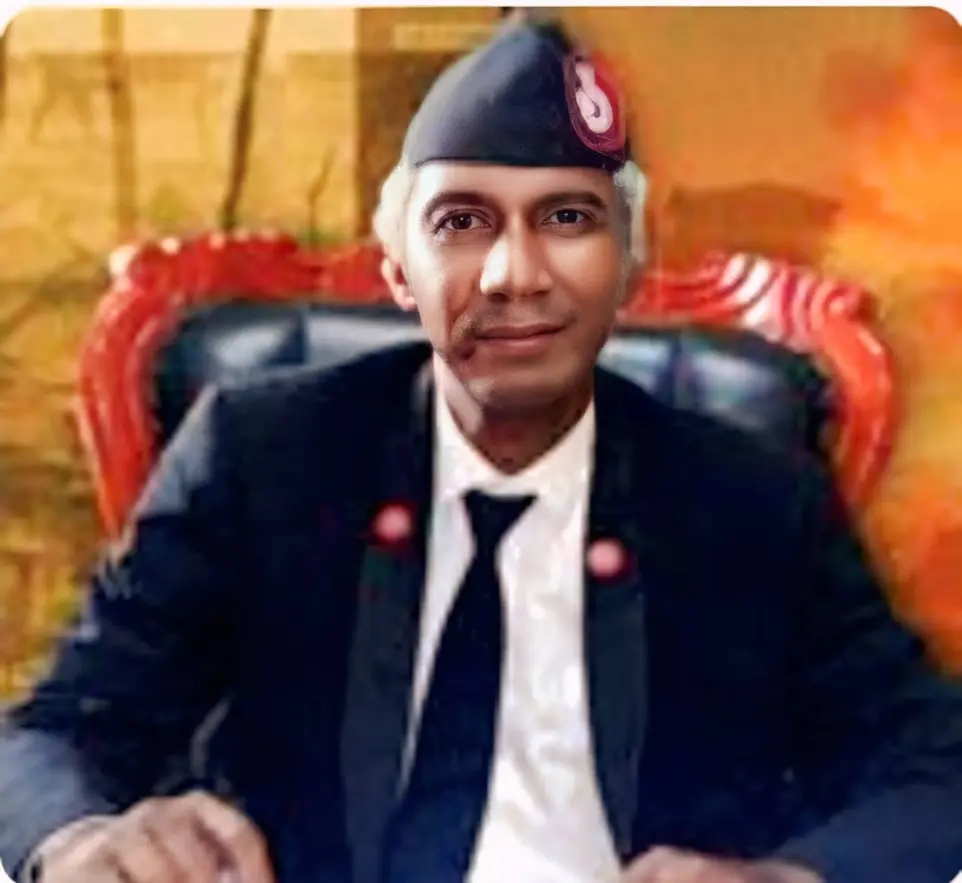
MR. Nazir Ahmad. AH. Kamanda-Bongay
Tel: +23276714926, Email: nazirbongay@gmail.com Website: XXXXXXXXX
The National Fire Force is the authority responsible to do firefighting, search, rescue and fire prevention activities in Sierra Leone. It was established in 1920 as the Freetown Fire Brigade. From 1980, it was transformed to the National Fire Force when the National Fire Service act of 1980 was passed into law.
The Headquarters of the National Fire Force houses the forces administrative department, fire engines, equipment and fire service personnel. In recent years, the Fire Service has spread across into various areas including Aberdeen, Kissy, Rokel, Bo, Kenema, Makeni, Kono, Kambia, Moyamba, Kailahun, Pujehun, Port Loko, Magburaka, Kabala, Bonthe and Lungi, in addition to the Freetown Central Headquarter.
The Sierra Leone Commission on Arms and Ammunition:
@ State Avenue, Old Defence Building, Freetown. Tel: +23276352161, Website: XXXXXXXXXX
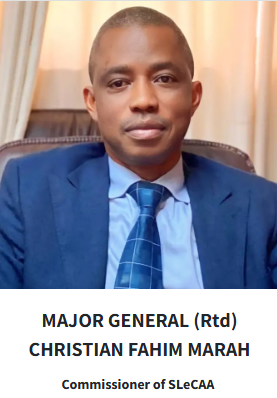
Commissioner
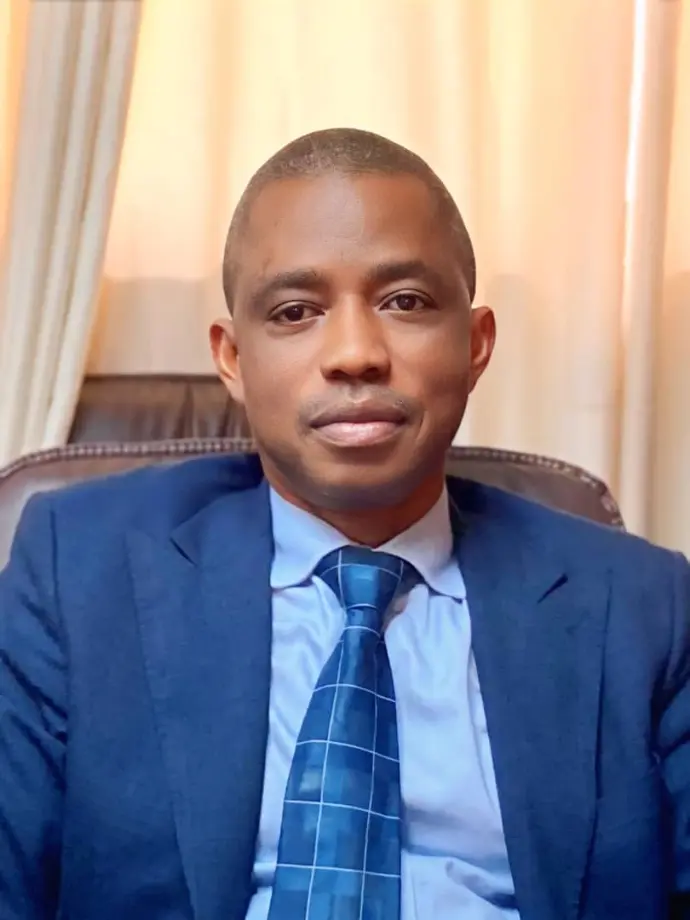
Major General (Rtd.) Christian Fahim Marah
Contact: +23276745711 Email: fcmarah@gmail.com
About SLeCAA
The Sierra Leone National Commission on small Arms was established in 2003 as a National Focal Committee (NFC) on Small Arms within the Ministry of Defence (MoD).
In 2004, the NFC was moved to the Office of National Security (ONS) under the Office of the President.
In 2005, the NFC was transformed into a Directorate of Small Arms and Light Weapons where its Director and Deputy were appointed.
In 2010, Parliament passed into law the Bill to establish the Sierra Leone National Commission on Small Arms. This marked the transformation of the Directorate into the present Commission.
In 2012 the Arms and Ammunition bill was enacted into law to guide the day-to-day activities of the Commission. Because of the many gaps identified in the previous act and the Commission’s quest to be ATT compliance, the Sierra Leone National Commission on Small Arms Act,2010 (Act No.6 2010) and the Arms and Ammunition Act, 2012 (Act No.9 of 2012) were repealed and replaced by the Sierra Leone Commission on Arms and Ammunition Act 2023 (Act No.24 of 2023).
The promulgation of this act is a milestone achievement, as it extended the mandate of the commission to include the supervision of all conventional arms, ammunition, components and other related materials.
Mandate
It is a body established by an Act of parliament to regulate and supervise the manufacture, trade and use of arms, ammunition and other related materials and to provide for other related matters.
Mission
The mission of the Commission is to effectively coordinate a national response to reduce armed violence through collaborative engagement with national, regional, and international stakeholders.
Vision
Is to achieve a developed, peaceful and secure Sierra Leone free from unregulated arms, ammunition, and other related materials.
Main functions of SLeCAA
The commission issues firearm licenses to individual, having meet all requirement. But no issuance of licenses to companies.
To set programs of action to prevent, combat and eradicate the illicit manufacture, trade and use of arms in all aspects.
To educate and sensitize the public and provide information on the dangers associated with the illicit manufacture, trade and use of arms.
To ensure that obligations under the ECOWAS convention are complied with.
To inspect arms and ammunitions.
To established and maintain an Arms Register for transmission to the ECOWAS Secretariat.
To advice the Minister of Internal Affairs on the formulation of policies and strategies as contained in the convention and any other relevant international conventions to which Sierra Leone is a party.
Regional Offices
Bo - Southern region
Makeni - Northern region
The National Civil Registration Authority
@ 2 Walpole Street, Freetown, Website: ncra.gov.sl
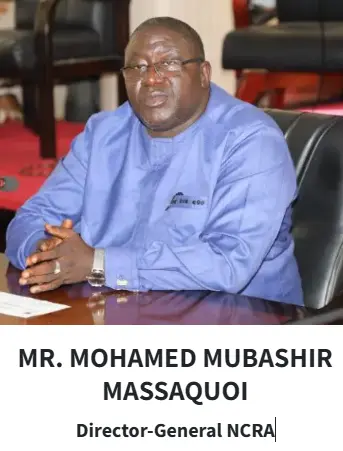
Director-General
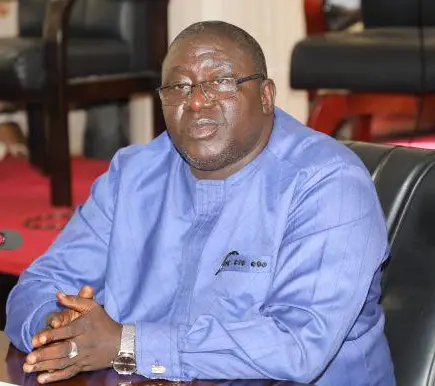
MR. MOHAMED MUBASHIR MASSAQUOI
Tel: +232XXXXXXXXX, Email: XXXXXXXXXXXXX, Website: https://ncra.gov.sl
The National Civil Registration Authority (NCRA) was established by the National Civil Registration Act, passed by the Parliament of Sierra Leone on June 30, 2016. Before the emergence of NCRA, identity landscape in Sierra Leone was uncoordinated with various institution registering different vital events and issuing different identity documents.
The situation created the avenue for unscrupulous persons to change their dates of births and identities at will to fit any situation they find themselves in at any given period. It was against this background and the need to structure identity services in Sierra Leone that the National Civil Registration Authority (NCRA) came into force in June 2016 by an Act of Parliament to replace the existing uncoordinated registration with a robust, consolidated and coordinated civil registration system.
The National Civil Registration Act, 2016 established the National Civil Registration Authority (NCRA) and provides for a mandatory registration of Citizens and non-citizens resident in Sierra Leone, vital events ranging from marriages, divorces, nullities, births, deaths, adoptions as well as, provides all registrants with a multi-purpose identity card with the National Identification Number (NIN) engraved on it for clear identification. The Act laid the foundation for the creation of a permanent civil register and centralized the registration of vital events in Sierra Leone, replacing functions previously handled by institutions such as the National Office for Births and Deaths and the Office of the Administrator and Registrar General.
Leadership
The current Director General of the NCRA is Mr. Mohamed Mubashir MASSAQUOI, appointed by His Excellency, President Dr. Julius Maada BIO, in July 2018. Mr. MASSAQUOI brings over 15 years of professional experience in Administration, Management, Programming, Peacebuilding, and Democratic Governance, having worked with both local and International Organizations, including the United Nations.
Mandate
The NCRA is mandated by the National Civil Registration Act of 2016 to ensure the Continuous, Permanent, and Compulsory Registration of Vital events for all Citizens and Non-citizens Resident in Sierra Leone. These events include births, deaths, marriages, divorces, adoptions, and nullities. The Authority is responsible for issuing Securitised, chip-based, and Multipurpose Identity cards, including National Identification Numbers (NINs), to enhance identity management and access to services. The NCRA also collects, compiles, abstracts, and publishes vital statistics to support national planning and governance.
Vision
To establish a robust, innovative, and integrated civil registration and identity management system that ensures every individual in Sierra Leone is recognized before the law, promoting good governance and human development.
Mission
To provide efficient, secure, and accessible civil registration and vital statistics services through a decentralized and technology-driven platform, ensuring the issuance of legal identity documents to all residents of Sierra Leone, in line with international best practices, to combat identity fraud and enhance public service delivery.
The National Drug Law Enforcement Agency (NDLEA)
# 2 Walpole Street, Freetown - Website: www.ndlea.govv.sl
Executive Director
MR. PRINCE BULL-LUSENI
Tel: +23278320179, Email: jaiahkaikai69@gmail.com
That background could make his leadership of the NDLEA particularly significant for drug rehabilitation and the new rehabilitation regulatory framework you’ve been working around.
THE OFFICE OF THE MEDICAL EXAMINER
@ 14 Gloucester Street, Freetown, Website: XXXXXXXXXX
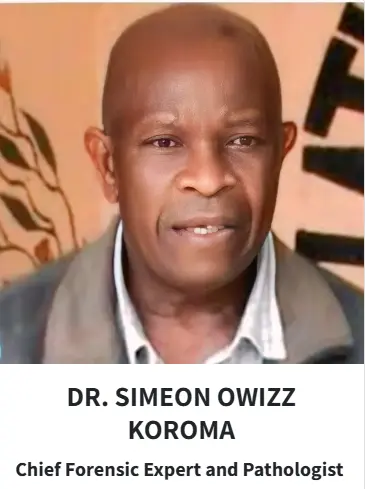
Government’s Chief Forensic Expert and Pathologist
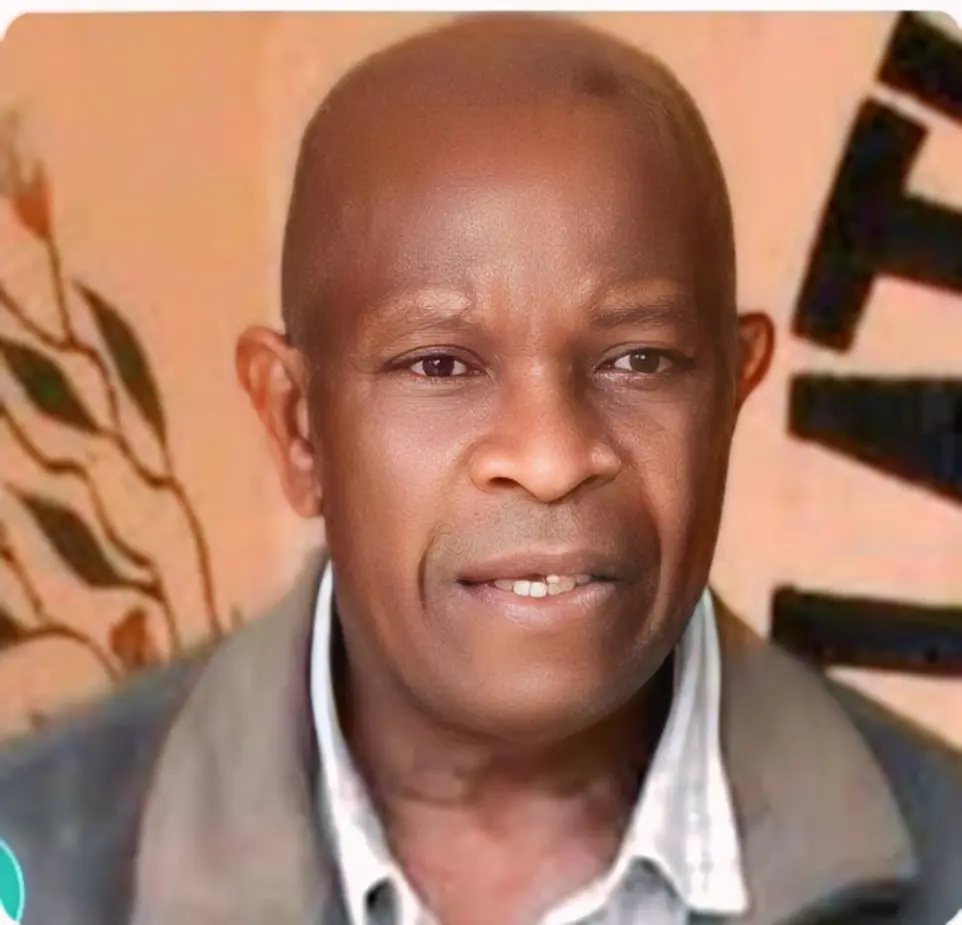
Dr. SIMEON OWIZZ KOROMA
Tel: +23276668762, Email: simeon.koroma@moia.gov.sl/ocme.sle@gmail.com
To support, supervise and advise the office of the Medical Examiner to effectively, efficiently and professionally deliver on its strategic plan in order to achieve the following key activities:
The Independent Police Complaints Board
@ New England Vile, Old SLBC TV Building, Freetown, Website: XXXXXX
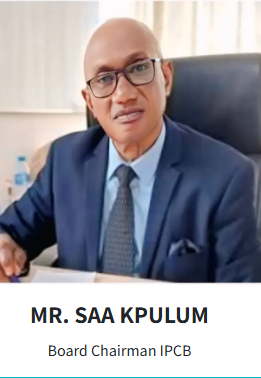
BOARD CHAIRMAN
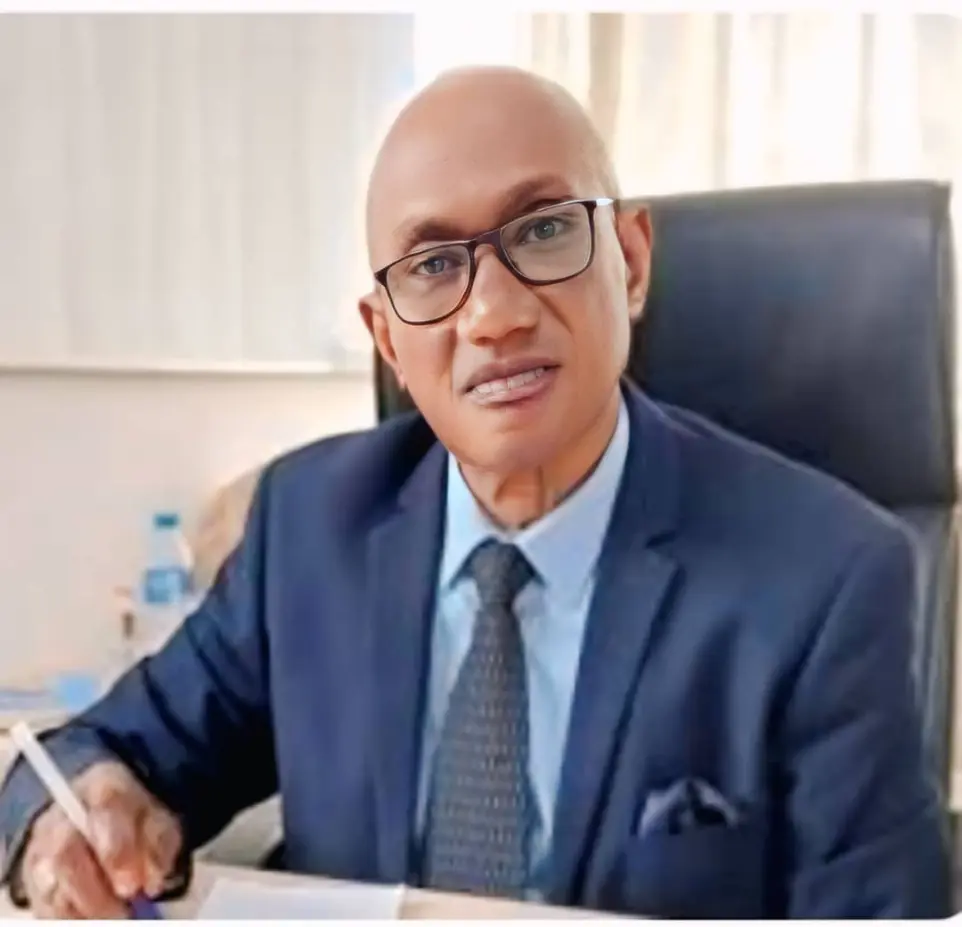
MR. SAA KPULUM
Tel: +23276601497, Email: boardchairmanipcb@gmail.com
Saa Kpulun is a highly experienced leader with a distinguished career in public service spanning several decades. He was appointed in November 2024. Before his role at the IPCB, Mr. Kpulun served as Principal of the Civil Service Training College from 2022 to 2024 and held key positions, including Executive Secretary of the Constitutional Review Committee from 2015 to 2017, and Executive Secretary of the National Commission for Social Action (NaCSA). He was also Permanent Secretary in various Ministries, including the Ministry of Transport and Aviation from 2008 to 2014, demonstrating a long-standing commitment to Public Service and national development.
Mr. Kpulun holds an MBA from the International Centre for Public Enterprises, University of Ljubljana, Diploma in Public Administration, Lincoln University, and BA Hons. (History & Politics) from the University of York, United Kingdom.
IPCB Background
The Independent Police Complaints Board (IPCB) is a non-departmental public body established in July 2013 by the Police Council under Section 158 (2) of the Constitution of Sierra Leone 1991 (Act No. 6 of 1991).
The functions of the ‘Board’ are set out in Section 3 (1&2) of the Independent Police Complaints Board Regulations, 2013, and include the following:
The Board shall investigate:
a. The death of any person while in the custody of the police.
b. A fatal road accident in which a police vehicle is involved.
c. A shooting incident where a police officer has discharged a firearm or killed a person.
d. Incidents of injuries, assault or wounding caused by a police officer.
e. Allegations of misconduct involving an officer of the rank of Superintendent or higher.
f. Any matter involving misconduct by the police referred to it by the Inspector-General of Police where the Inspector-General of Police thinks an independent investigation will be in the public interest.
g. Any matter or incident which it thinks the action or inaction of the police is likely to impact significantly on the confidence of the people in the police.
h. Any matter, whether remote or otherwise, which gave cause for an investigation to be conducted under this regulation.
(2) The Board shall advise the Police Force on ways in which incidents involving the
Police Force as provided in these Regulations may be avoided or eliminated.
Corporate Ethos of the IPCB
Vision
The IPCB exists to ensure that the Sierra Leone Police is responsive to the needs and concerns of the people of Sierra Leone, which it serves.
Mission
The IPCB's mission is to build public trust and confidence in the Sierra Leone Police by seeking to establish the truth, determining facts, and ensuring that justice can prevail.
Guiding Principles
The IPCB stride s to maintain the highest standards of ethical behavior through the incessant application of its core values. The following values are integral to the Board achieving public trust and confidence in both the IPCB and SLP:
a. Integrity - consistency of actions, methods, and principles based on honesty and truthfulness.
b. Justice and Respect for Human Rights are the cornerstone of human dignity, freedom, and development. Injustice anywhere is a threat to justice everywhere.
c. Independence – the IPCB is not subject to the control or direction of any other authority in the performance of its functions.
d. Transparency and Impartiality – guaranteeing that in the discharge of its functions, fairness and equity will always prevail; and
e. Responsiveness – carrying out its functions with diligence and promptness to meet the needs of its clients.
Board Membership
According to Regulation 1(1) of the Independent Police Complaints Board Regulations 2013, the Board membership consists of a chairperson and six other members (institutional representatives). The Chairperson is appointed by the President and others drawn from the following institutions as listed below:
1. The Chairperson is appointed by the President
2. Human Rights Commission of S/L Rep.
3. Sierra Leone Bar Association Rep.
4. Anti-Corruption Commission Rep.
5. Inter-Religious Council of Sierra Leone Rep.
6. Police Council Rep.
7. Rtd. Senior Police Officer selected by the Ministry of Internal Affairs